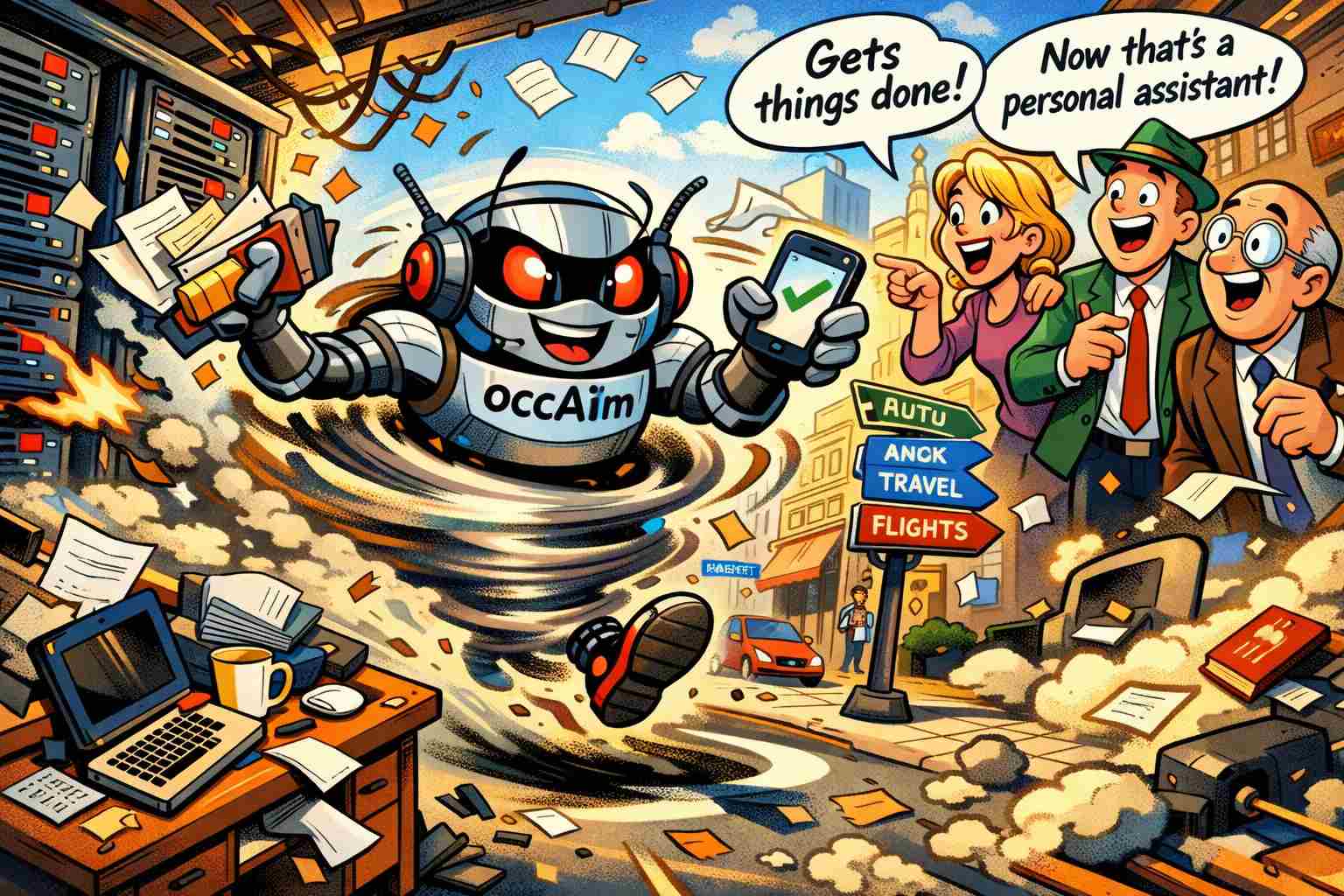
OpenClaw looks like a classic “right product, right timing, right interface” breakout.
What exploded was not just a repo — it was a category shift from “AI that answers” to “AI that acts.” Business Insider’s reporting points to a broader jump in agent usage (and inference demand) in early 2026, with OpenRouter token volume rising from 6.4T in early January to 13T by the week ending Feb. 9, and one VC source explicitly calling out OpenClaw as a major driver. BI also ties this to the move from chatbot UX to autonomous computer-use workflows.
Why OpenClaw hit so hard, so fast:
- It matched what people wanted next: not another chat window, but a persistent assistant that can handle tasks across apps/services. Reuters describes fans using it for things like email, insurers, and flight check-ins.
- It reduced friction: OpenClaw’s own positioning is “runs on your machine” and works through the chat apps users already live in (WhatsApp, Telegram, Slack, Teams, etc.), which is a much easier mental model than “learn a whole new AI product.”
- It aligned with the self-hosted / control wave: “Your assistant. Your machine. Your rules.” That local/control/privacy framing is exactly the counter-position many builders wanted versus centralized SaaS assistants.
- It rode the agentic capability curve at the right moment: BI notes frontier models improved in late 2025 and that the ecosystem was shifting toward “computer use” and autonomous execution. OpenClaw launched into that exact opening.
- It generated a social/media feedback loop: Reuters reports a viral rise since its November introduction, with 100k+ GitHub stars and 2M visitors in one week (per Steinberger’s blog). That kind of visible velocity creates its own gravity.
The “rightest thing at rightest time” angle is especially strong because OpenClaw sits at the intersection of several trends that all matured together:
- Better models
- Cheaper / more available tooling for builders
- Mass appetite for automation
- Open-source credibility
- Messaging apps as the natural control surface
That combo is rare.
There’s also a second reason it blew up: it’s polarizing. The same thing that makes it compelling (broad access + action-taking ability) also makes it scary. Reuters notes regulatory warnings about misconfiguration and breach risk, and WIRED reports multiple companies restricting/banning OpenClaw use on work devices due to security concerns. Even OpenClaw’s own rebrand release highlighted security hardening work.
So the real story is not just “viral project.” It’s this:
- OpenClaw proved demand for personal agents is real
- and simultaneously proved the safety/governance stack is not ready
That tension is exactly why it got so much attention.
The OpenAI/Steinberger development reinforces that interpretation. Reuters and Steinberger’s own post both say he’s joining OpenAI, while OpenClaw moves to a foundation and remains open-source/independent. In his words, he wanted the fastest path to bring agents to everyone, with better access to models/research. That is basically market confirmation that the category is strategic now, not later.
One line: OpenClaw hit because it turned agentic AI from a demo into a lifestyle interface (chat apps + local control) exactly when the models became just good enough for people to believe.