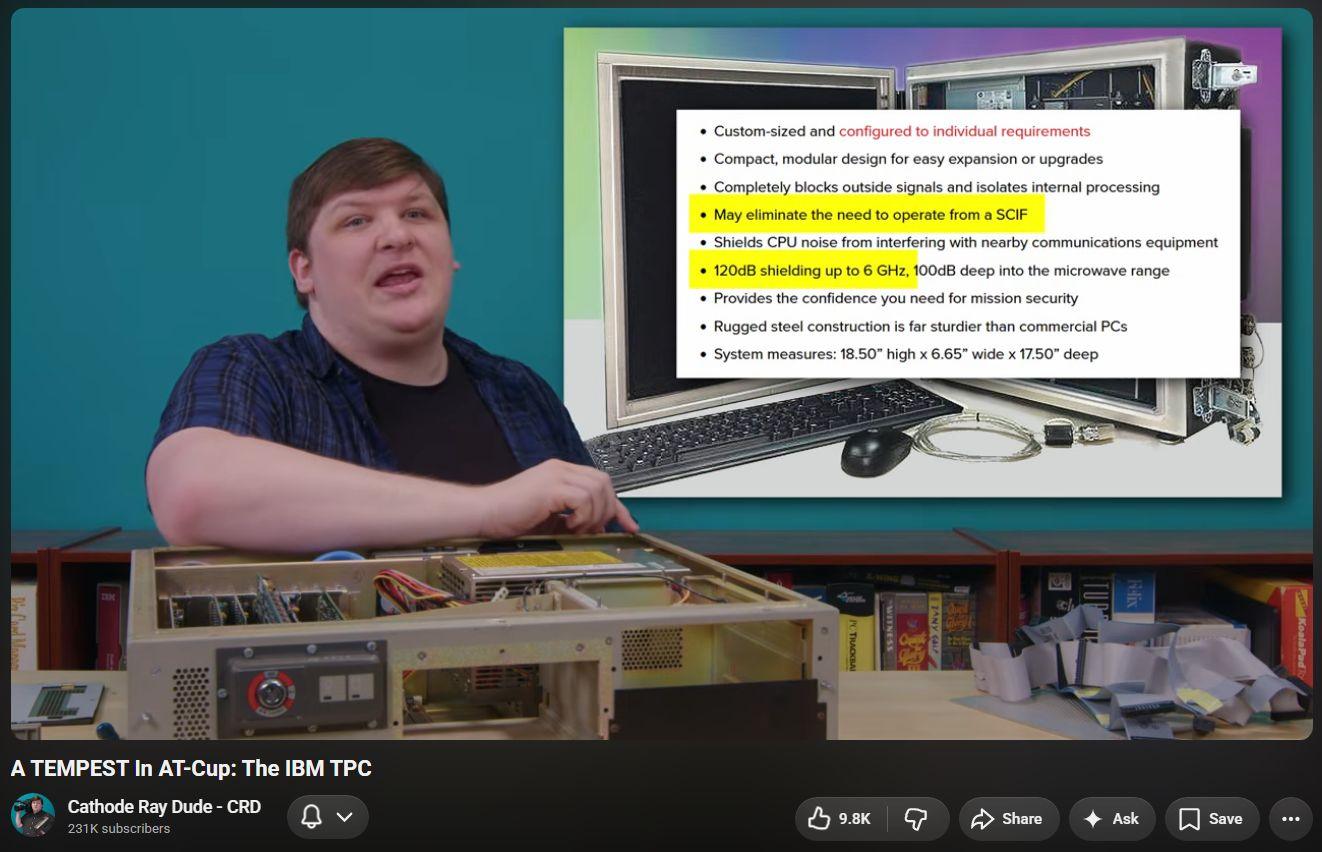
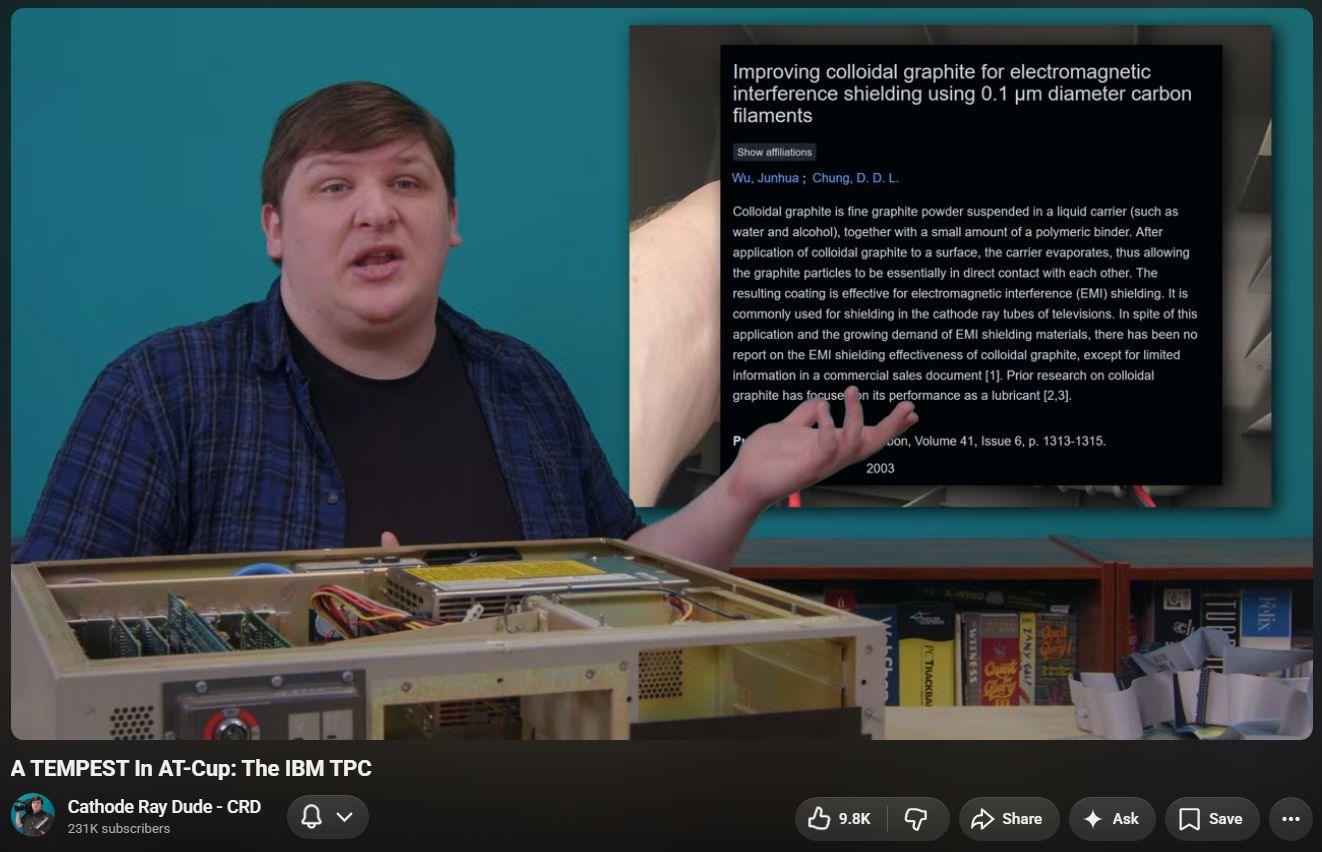
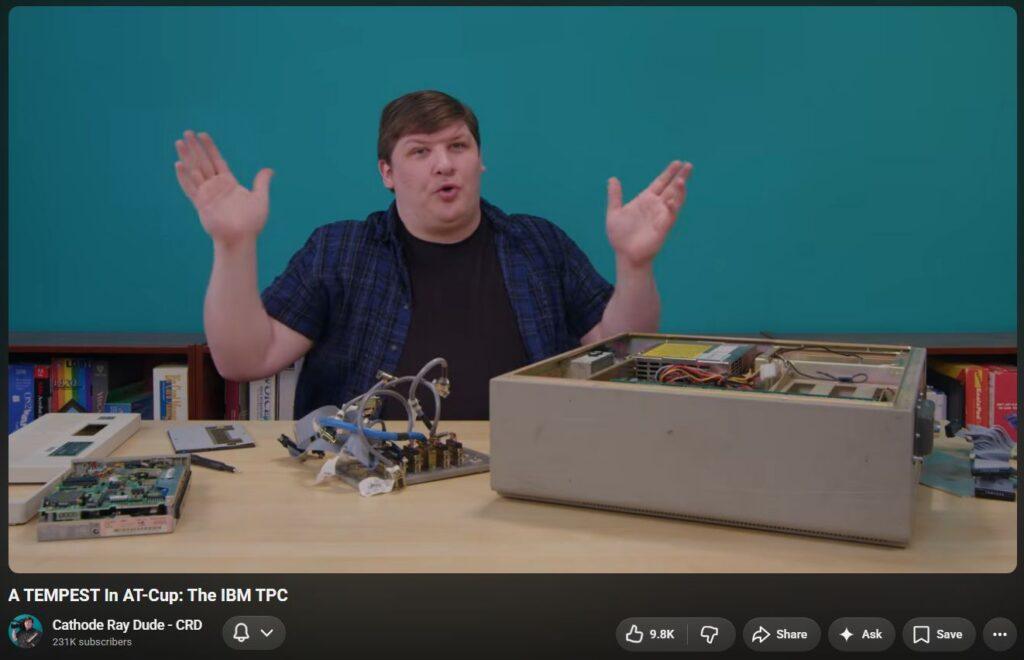
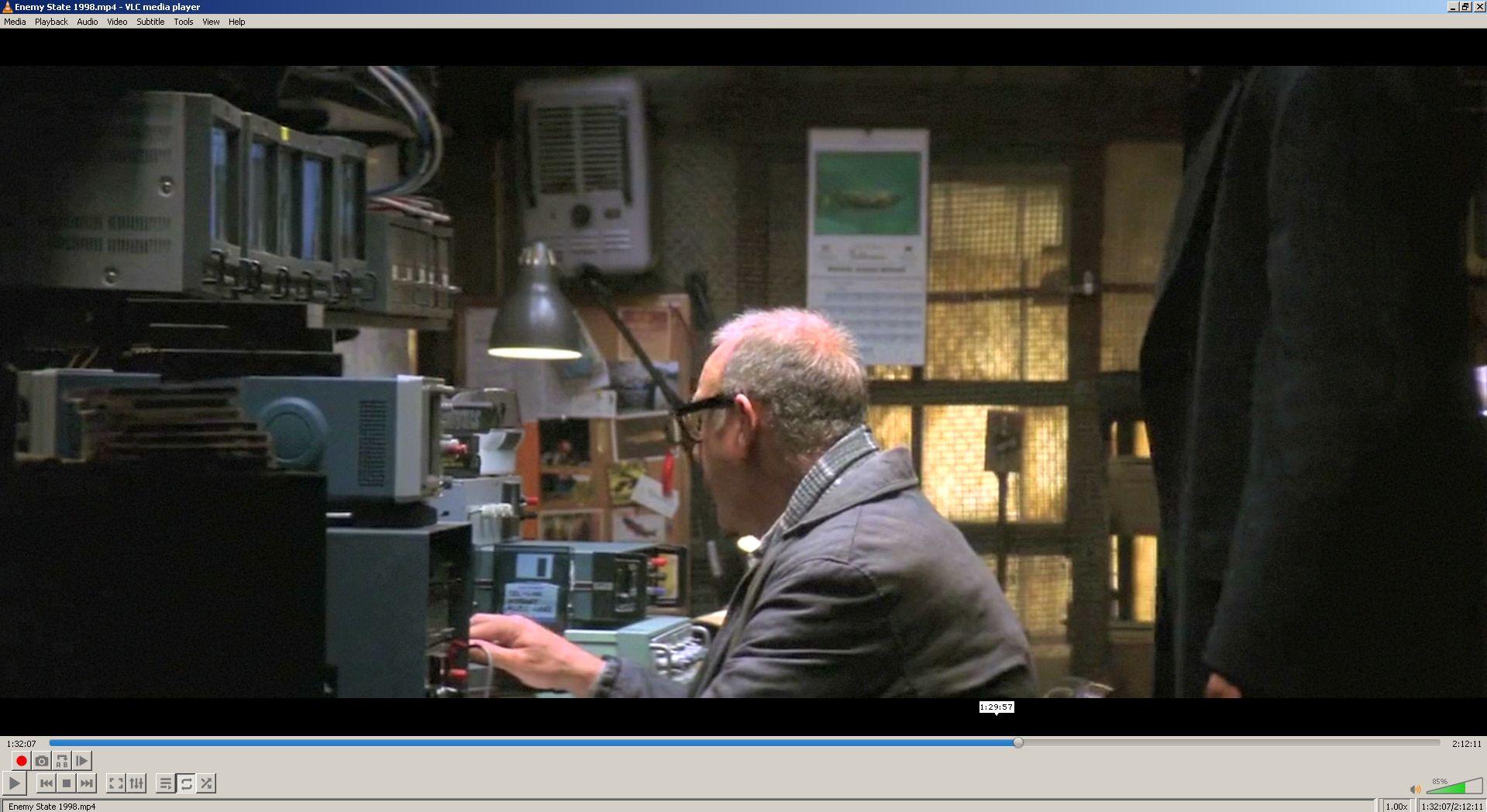
This guy breezily takes apart an old IBM TEMPESTed PC and along the way describes thoroughly the reasons why and how the engineering and build was done, what problems it solved, etc. “It’s not paranoia if They are in fact ‘out to get you’ and They know how to do it.” 1:52:05
This brings me back…. by the time I joined the Marines, my little ISMO office was flying Zenith Z-248s which were also Tempest certified. There was a van that went around to bases demonstrating the need for Tempest – they could show keyboard output of an unprotected PC 100ft away, through walls. Same for video. Signals Intelligence was a thing. I spent my last year overseas… in Okinawa, our RASC (Mainframes) sat near a seaport (Naha), and a Russian “fishing trawler” sat permanently docked, with a very impressive set of antennas pointed directly toward Camp Kinser and our RASC. The “flying” is a reference… the ISMO office was at an Air Station, and at a unit training exercise, an instructor asked my gunny what we flew – “Z-248s” was his response.
For anyone who may be entertained by the following information, the problem with the lid and with long slits isn’t that the radio waves can “fit through” the very narrow gap… The problem is that radio waves are blocked by eddy currents in the shielding. The incoming radio wave pushes on the electrons of the conductor, they move in step with the radio wave, and this produces an exactly opposite wave that serves to completely cancel the original (from the perspective of someone outside the case – inside the case, the new wave looks like a reflection, which I suppose it is). When you cut a slit in the material, or fasten two pieces together with a tiny gap between them, this blocks the eddy currents, and when it gets to a significant fraction of a wavelength it allows the radio waves to go through the metal on either side of the slit. Tightening the screws on the lid reduces the resistance between the lid and the front panel, allowing more eddy current to flow, making the cancellation closer to total. I don’t know anything about tempest hardening, but in the industrial sector, when it’s necessary to provide serious shielding, it’s standard practice to use both RF-absorbing and RF-reflecting materials. I didn’t see anything in your machine that seemed like it was designed to absorb energy.
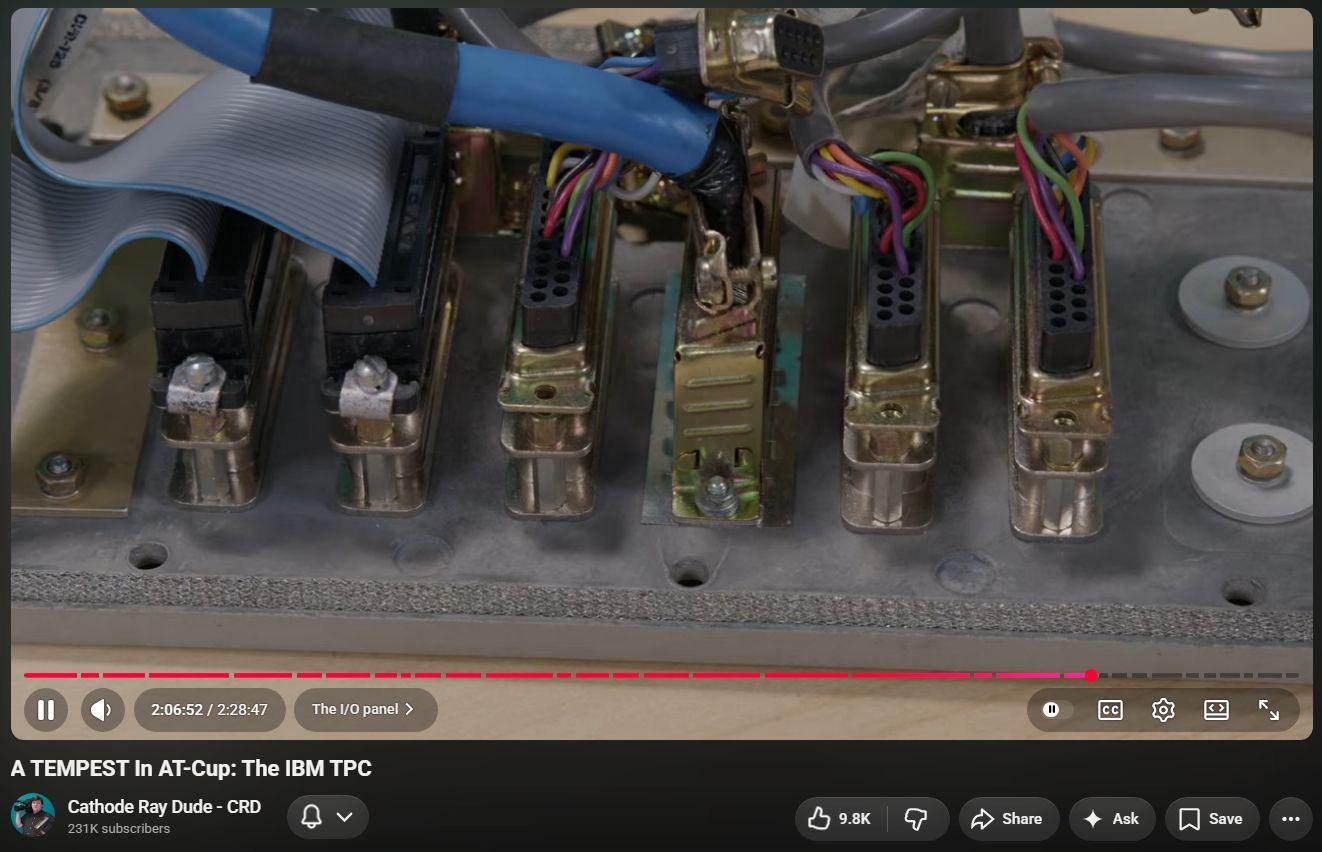
The LAN port is just industrial RJ45. I worked in wind turbines, we used it for Profibus connectors on PLC gear. And for a lot of sensors. Those get screwed together so they don’t vibrate out.
I remember getting a copy of Popular Mechanics in like 1997 that had the constitution in flames on the cover and a headline like “How The Government Spies On You” and one of the things in there was the TEMPEST program. They quit doing articles like that and the last time I looked, the head editor was the intern back in 1997. He was the only one still there. Now they never break any stories like that.